

Longing to Belong
How does it feel to be cast out of church? Fine, thanks.

I have old memories laced with candle scent. Our church had a 14 foot tall nearly naked beige Jesus hanging up front on a cross over the altar, and a “cry room” in back, where Father Heretick1 expected parents to take their noisy kids. He would stop mass to tell you this. From there, you could watch mass happen through a large glass pane. Mom did not like it in there. She wanted us out in the midst of things, close to the altar. Closer to God.
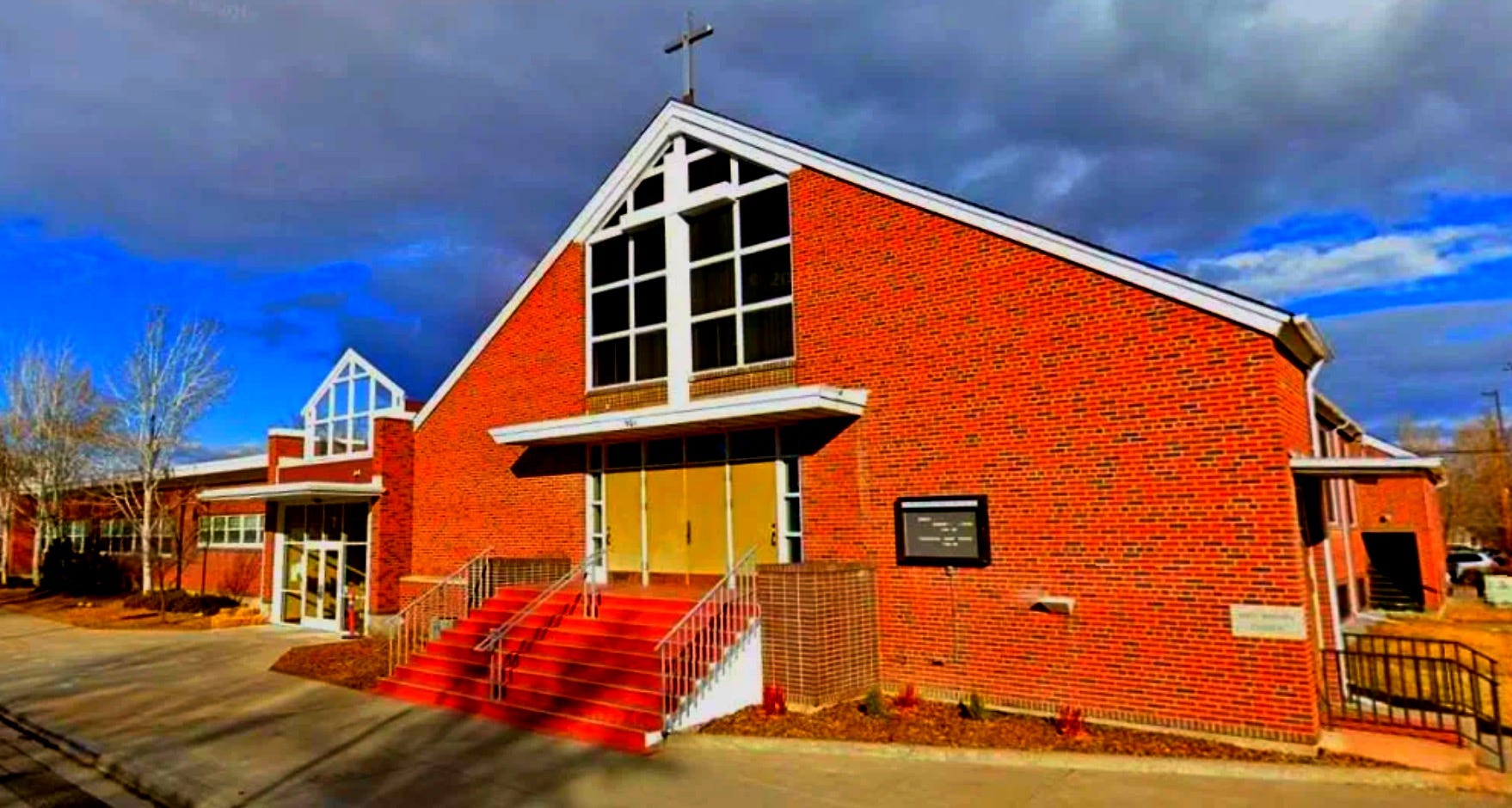
After aging out of the cry room—which happened quickly for me, thanks to her—we returned to Mom’s preferred seats, nearly in front, on the left-hand side. The seats were stage right from the altar, in front of Mary, the Mother of God, whose statue stood on a plinth mounted on pale, pine-wood wall paneling, over some flowers. We never sat on the right side, stage left, where Jesus’ step-dad, Saint Joseph—orYusuf, in Aramaic (IYKYK)—stood on a plinth of his own.
Around age 4, I recall furtively licking the wood railing on back of the pew in front of me, while kneeling and leaning against it, shoving my sister and pretending to pray. I was bored. It tasted sour.
The better sensory hit, from a thousand or so masses2 I sat through in this church before leaving for college, was from the candles. Their warm odor flowed off the altar and flooded the nave, particularly after they were snuffed at the end of each service. Lighting and snuffing the candles was one of the best parts of being an altar boy, which I was, for a while. That, and learning to whisper every word of the Eucharistic prayer along with the priest; a rebellious act (only priests are supposed to speak that prayer), which felt important to me, at the time.
My parents were devout, old school Catholics, raised on the Latin Mass. Our family might well have missed a meal before missing Sunday mass. Neither ever happened. We just kept showing up, saying the prayers, sitting, standing, kneeling, and walking up the aisle to the altar for communion, or Good Friday “veneration of the cross.” Which meant kneeling to kiss Jesus’ feet, on one of two crucifixes laid in front of the altar by Father Heretick for this purpose. Even on family vacations, Dad would try to find a local church for us to attend.
The importance placed on regular participation, and ritual observance, built a momentum over time. It built a predictability that led, over time, to a sense of assurance about the nature of things greater than me. Assurance that was a pretty convincing sell, for a lonely kid trying to dodge bullies on his way to adolescence. There were times when I felt like I belonged to a global society, collectively protecting me, and guiding me back to the source of all reality. Yeah, I felt that. Sometimes. For a while.
It can be hard to wonder who we are, where we fit, and why. Everyone stares at the ceiling, sometimes. Which can lead to questions that religions are happy to answer, with authoritative claims. Some of which make more sense than others.
I came out as gay in 1984. And, I stopped going to church. Having finished 12 of my 16 eventual years of Catholic school, I knew very well by then that the way God made me to express love and affection was, to put it gently, fundamentally incompatible with the doctrines of Rome and my Catholic school cohorts.3
I came out anyhow. A nun once told me “God does not make junk,” and I believed her. She probably saved my life.
I missed the smells and bells, though.
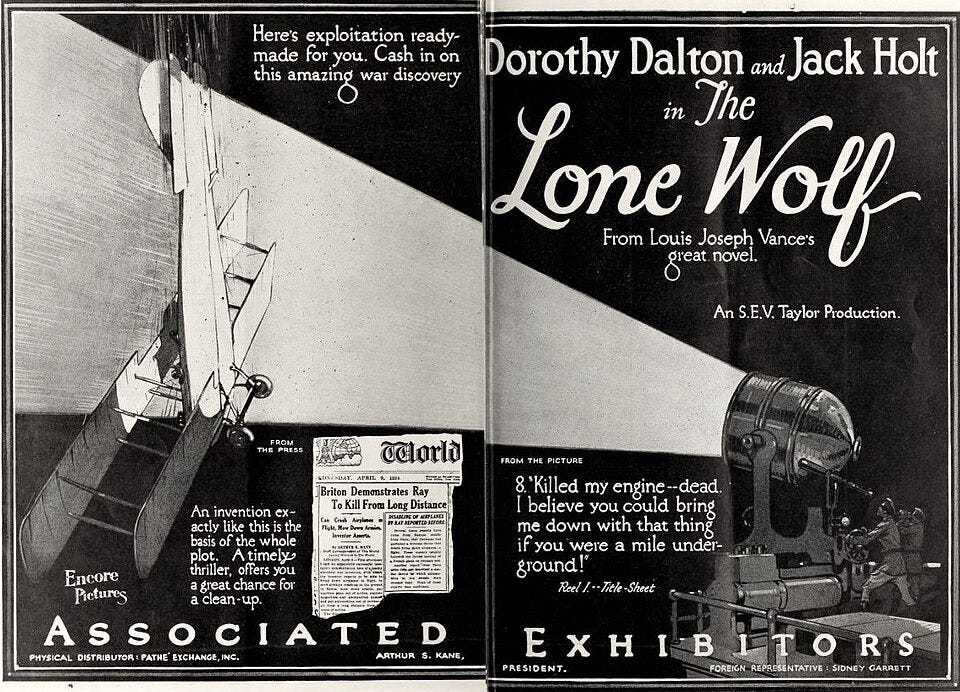
American pop culture has an obsession with lone wolves. Radical individualism, whether wrapped in cowboy or soldier drag—but always toting some weapon or tool—is a trope we fear in our crime statistics, but glorify on video.
_-_3.jpg)
What we hear of less is how we are all social creatures, with a deep drive to work together, with more than just one buddy, and for more than just running a ball down some grassy field.
Lone wolves are sexy. You can also take them out with a single shot.
Quitting church was not difficult, on the surface. Lazy Sundays are seductive, and productive for more creative pursuits. The much more involved story, for me, is why I have ever gone back. Because I have.
Not to the Roman Catholics, of course. My self-respect could not take the humiliation that returning to the church of Rome would demand of me. To subject myself to such an authority, one which continues, to this day, to deem people like me “intrinsically disordered” by God, would require me to believe in a sadistic Creator. Which I refuse to do.
To return to the Roman faith, I would have to believe in a God who creates “His” homosexual children specifically to live without love and affection. I would also have to believe that the only legitimate function of human love and affection is to make more babies on an overpopulated planet.
Both of these notions are simplistic, to the point of silliness. Dangerously silly, in fact, for the grave way some piously intone these points, while raising their whips to deliver another beating upon the flock.
Love stories taught me to respect myself, instead, and to laugh when it helps.
I still want to feel like I belong, though, to some flock or herd or tribe. I have always wanted to feel part of something bigger than myself. No doubt because I felt cast out of exactly that feeling, at a young age, by the Roman Catholic church, the biggest organization in history, religious or otherwise.
I have always wanted some greater frame of reference, some deeper teaching, some … club membership … to which I could refer, when I lose track of who I am. I have wanted … something. Something that can feel like it is missing, when you are born, and expected to serve, as one of humanity’s most ancient scapegoats.
I never wanted to feel small, “queer,” and alone, having to figure it all out for myself, by myself. I wanted to belong, too. Which is a childlike desire, and one I learned at a very young age, by being shown who does not belong.4
So, I wandered, seeking answers. I have spent quality time chanting and dancing with Sufis. I have repaired my Christian damage by walking with Episcopalians. I am a Past Master of two Masonic lodges. And, I still spend hours each week on a cushion, practicing buddhadharma, a tradition first introduced to me by a bookseller in Billings, Montana, when I was still an altar boy.5

None of these define me. I am not sure I “belong” to any of them. I am not certain I belong to anything, at this point, other than to anyone willing to hold my hand, for so long as I am willing and able to lift it.
Even while holding hands, my identity is not fixed. I no longer believe any of us are so fixed as we might believe. Because as soon as I say who I think I am, my heart beats, and there I sit, one moment older again, still wondering at it all.
They tell me this may keep happening.
No lie, our parish priest’s last name was “Heretick.” More information about him, including legal allegations, and settlement funds paid, is linked below. For what it is worth, he played with little girls, not boys. No priest ever touched me.
https://www.bishop-accountability.org/accused/heretick-joseph-s-1947/
18 years at 52 Sundays per year, plus weddings, funerals, Good Fridays, and a couple year stretch of periodic 6am masses while I was an altar boy. Yep, about a thousand.
It is true, the two most recent popes have rearranged the deck chairs a bit, when it comes to “the gays.” But paragraphs 2357-2359 of the Catechism of the Catholic Church remain unchanged. I doubt they ever will be. As a result, I will believe the Roman church respects all of God’s creation, when I see them do so as a matter of doctrine. They have not. Nor do I expect they will. As of just last month, the Catholics have a brand new, explosive set of child sex abuse reports to consider, this time coming from Rhode Island, the most Roman Catholic state in America. The “good, conservative” Catholics will no doubt once again scapegoat those they coerce into a lonely perversion of the charism of celibacy. The scapegoat ritual goes all the way back to Leviticus. Projecting your faults on others is an ancient Judeo-Christian tradition.
Kids are basted in “evil gay” stereotypes from the moment their parents plop them in front of their first Disney show; to wit:
The spiritual adventures implied by this paragraph are part of a memoir in progress titled Billyville: Confessions of a Post-Punk Homo Altar Boy from Montana, which will hopefully be finished and published before I die. Wish me luck.
Same. Although I am straight, the church's treatment of people I love who are gay was, I think, the fingernail under the linoleum that started chipping away at my beliefs. Like you, I still long for a spiritual practice, but belief eludes me.
Leo, thank you for your story. I too was a Roman Catholic. I still run old RC messages through my head. I guess more therapy is the answer. Or, perhaps, it's companionship for which I yearn and need.
That the largest relisious institution in the world still has it's prejudices and progroms shows how truly small this institution really is.
I'm not disordered, I'm disobedient and I wouldn't have it any other way. And I believe, neither would God.
Richard