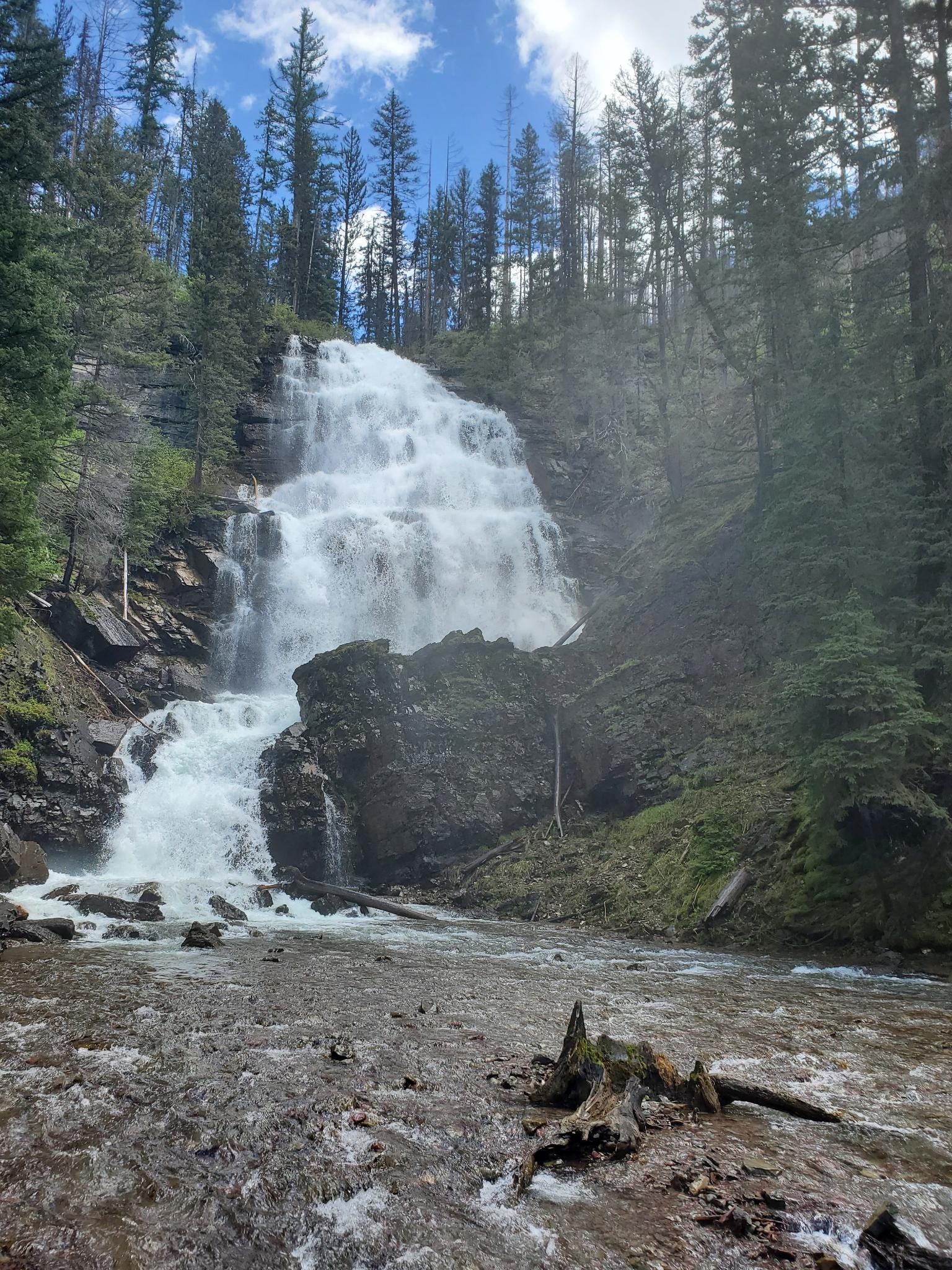
Every time I drive back into that small Montana town, a knot forms in my stomach before I even see the welcome sign. The road curves through familiar hills and broken fences, past fields that once felt endless when I was a kid. There’s a strange pull to it, like gravity or guilt, something that keeps me coming back even when I don’t want to. Maybe it’s the curiosity to see if anything’s changed or maybe it’s just the need to prove that I did.
The air hits different there. Dry and cold, the kind of cold that carries dust and memory. I can almost feel the years pile up in the wind; the walks home from school, the slammed doors , the silence at the dinner table, the laughter that always seemed to belong to someone else. It’s funny how a place can still make you feel twelve years old again, no matter how far you’ve gone or how much you’ve grown.
I park outside the gas station where everyone used to hang out after school. It still smells like cheap coffee and gasoline and the same man is behind the counter, a little grayer now. He looks at me like he’s trying to place a name to the face. He probably remembers me as the quiet kid who never looked anyone in the eye. I don’t bother to explain who I am.
Driving down main street feels like flipping through an old photo album you didn’t ask to see. The same cracked sidewalks. The same diner with faded red booths. The same high school with its peeling paint and unblinking fluorescent lights. Even the wind seems to whisper the same cruel names I used to hear in those hallways. For a second, I can still feel the shove between my shoulders, the laughter echoing down the corridor. The smell of disinfectant and sweat.
That’s the disgust part, the nausea that rises when I remember how small I felt there. How trapped. The hate that still lingers for a father who mistook control for love, who made home feel more like a punishment than a refuge. I can still hear his voice, sharp as barbed wire, calling me weak, broken, ungrateful. I can still see his eyes, empty and cold, when he told me I’d never make it out of this place.
But I did.
That’s the small light I hold onto every time I come back. I did get out. I survived.
Sometimes I park by the old bridge just outside of town. The one that hangs over the river that looked peaceful until you know how deep and dark it runs. I remember standing there one night in my twenties when the weight of it all felt unbearable. The loneliness, the shame, the endless echoes of not being enough. I remember the cold railing beneath my hands, the wind pushing against me like it wanted me to decide. That night could have been my last. But somehow, it wasn’t.
I think about the moment a lot when I am back there, how the same place that nearly killed me also taught me how much I wanted to live. How much I still do.
Now, when I visit, I stay in a motel at the edge of town. I don’t tell anyone I’m coming. I just watch the sun go down over the hills and listen to the wind. Sometimes I take a walk through the old streets. It’s strange, the buildings haven’t changed, but I have. I can walk past the school and not flinch, past my old house without looking up. I can stand where I once wanted to disappear and realize I’m still here. Breathing, Living, Healing.
There’s a quiet kind of happiness in that, not joy exactly, but something like peace. The kind that doesn’t need to shout to be real. Its in the simple fact that I left and built a life elsewhere. That the kid who once wanted to vanish found a way to exist. Sometimes that’s enough.
Still, every visit feels like an exorcism. I come to lay down a little more of the weight I’ve carried, to peel off another layer of the past. Each time, it gets a little lighter. Each time, I forgive the town a little more, not because it deserves it, but because I deserve the freedom that forgiveness brings.
I used to think this town defined me. That everything ugly about my childhood and my pain would always trace back to this place. But now I see it differently. The town was the fire but I was the one who walked through it and came out the other side.
So when I leave, when the mountains shrink in my rearview mirror and the sky opens wide, I let out a breath I didn’t know I was holding. The disgust fades, the hate softens, and what’s left is something quiet; a faint, flickering gratitude that I got to survive the place that tried to bury me.
I drive away with the windows down, the air colder now but cleaner somehow. Behind me lies the small town that raised me, ruined me, and in some strange way, redeemed me.