

Everyone Wants What Is Best For Their Kids. Right?
School segregation still exists

We have barely had a winter here in Helena. Buds were popping one month ago, in early February. This is not normal.
Then a foot of snow dropped last week in a single day. The roads were bad enough to delay my planned four-hour drive to Billings, to visit an old friend whose mother was dying in our hometown. The next day, a Chinook hit.
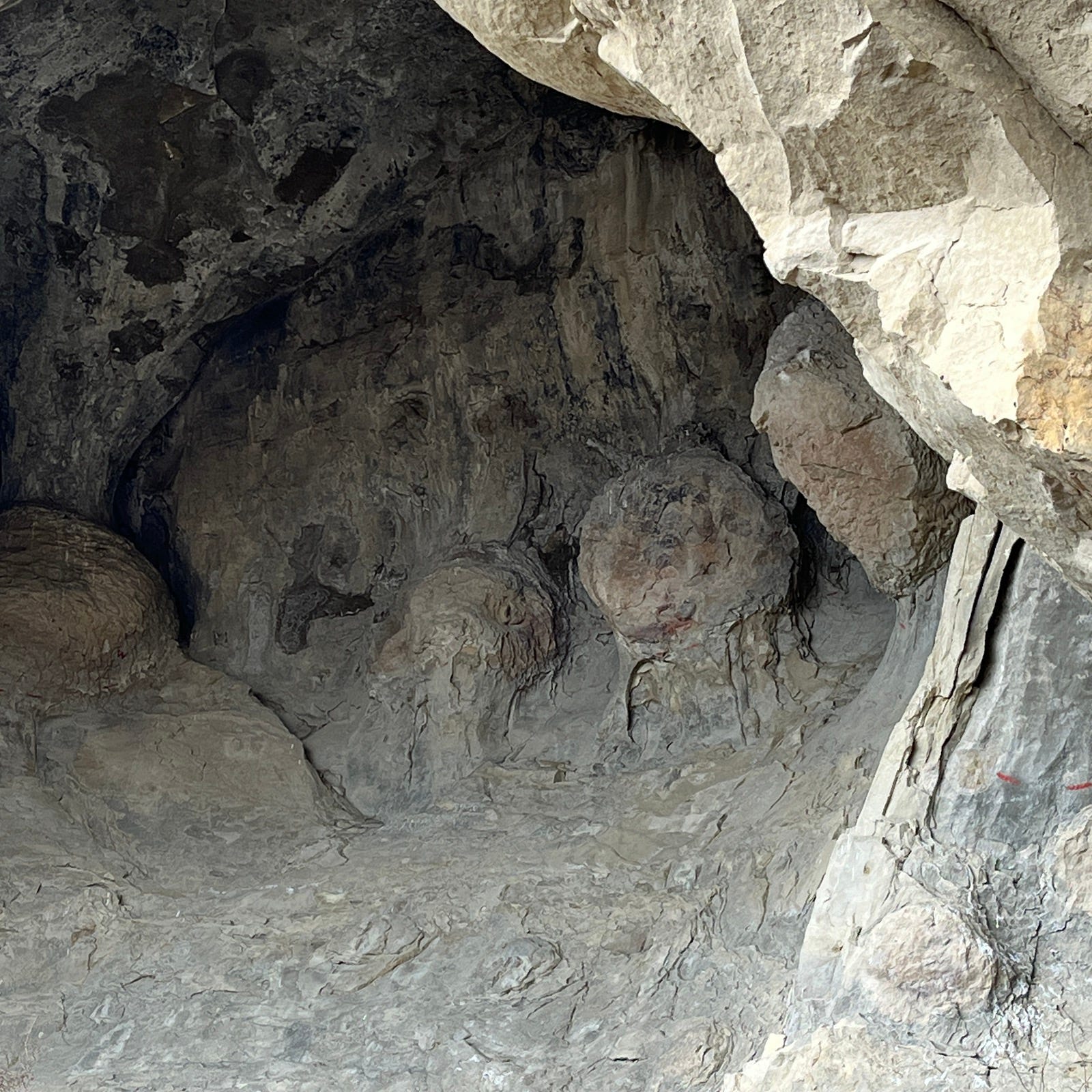
Within a couple of days, warm winds had left the roads bone dry. I drove to see my friend. His mother had died. We re-told childhood stories of our parents at the Pictograph caves1. He related his mom’s death to me, in minimal detail, and in keeping with his family’s traditional stoicism. I told him things of my own Mom which he had never heard before.
Now, one week later, spring is back. The buds are growing fat. We will have enough water this summer, at least here in Helena, but many people in many places will be left wanting.
Nature does not spread her resources equally. “God makes the sun rise on the evil and on the good, and sends rain on the righteous and on the unrighteous” (Mt. 5:45).
In-class disruptions were rare enough in my 1979 Catholic grade school that I vividly remember when P.J. showed up a few weeks into seventh grade. I had been going to school with pretty much my same twenty-five student cohort since first grade. New kids always got attention. In our little school there was nowhere to hide.
P.J. would not be ignored. He could not stay put or be quiet. In 2026, I imagine he would have be diagnosed with ADHD and prescribed with Adderall. In 1979, he was labeled “hyperactive,” and decamped from public to parochial school as a last resort. He would walk laps around the classroom, grab books, throw things.
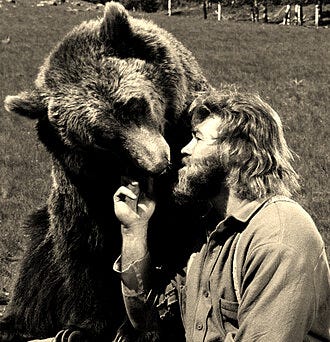
I remember the day our seventh grade teacher, Mr. Stevens—who was a ringer for the movie and television character Grizzly Adams—finally snapped. He had apparently done some rodeo. He grabbed, wrestled, hog-tied, and then roped P.J. into his student desk. Private school teachers can get away with such stunts. Or, they could in 1979.
Less than half an hour later, P.J. noisily toppled his desk and wriggled free of his ropes. Mr. Stevens chased, caught, and body-hauled him away.
He never came back. After a month of waiting every school day for P.J. to begin singing, talking to the ceiling, walking laps, or otherwise domineering the classroom, it returned to being basically quiet and orderly (bullying—of which there was plenty—mostly happened in the alley, a location which Grizzly Adams and The Nuns largely ignored.)
I have no idea whatever happened to P.J.. Frankly, I have not wondered about him in the decades since, until writing this.
During my 16 years in Catholic schools, I was never exposed to the widespead American cultural assumption that free, public education should be universally available. In my family, my sisters and I knew we were different.
Yes, we could be in a public school. The nearest one was less than a block away. My oldest sister had gone there for first grade. Now, we were fortunate to be with the (theoretical) “good kids,” across the street in Catholic school, instead.
Our parents made a choice, and they paid for it. The local Catholic school system was considered the best in town, at the time. Nearly half of its students were not Catholic, just college-bound.
Every tax season, our stay-at-home mom would complain about having to pay “extra” for her kids to go to Catholic school, when “we already pay school taxes.” Mom wanted her dollars spent on her kids, only.
I follow a writer here on Substack, named Freddie deBoer. He recently wrote a piece title “When People Say They Want to Send Their Kid to a Good School, They Usually Mean Schools Without ‘Bad Kids’.”2 I had never thought about how selective admissions and expulsions drive school reputation.
Public schools are required by law to teach every student. Americans have a constitutional right to public education. To expel a kid from public school essentially requires a court order.
On the other hand, private schools, including taxpayer-funded charter schools, can craft and shape their student bodies. They can select for “engaged” parents, typically meaning those wealthy enough to have time to spend on their kids. And, charter schools can expel “disengaged” students, the ones whose parent(s) struggle to make rent, despite multiple jobs plus side-hustles. Parents who often end up passing some of these struggles on to their kids.
In the new world of charter schools, the strugglers in general are the public school kids. The ones who are left to what the ongoing privatization of public funds and functions is leaving behind. We have a K-12 education system that expects its faculty to serve as I.T. technicians, mental health counselors, nutritionists, disciplinarians, role models, coaches, medication managers, standardized test proctors, huggers, tear-wipers, drug and alcohol treatment specialists, entertainers, record-keepers, and, oh, that’s right … Teachers.
These same public employees also need to be skilled professional educators, who can effectively teach English, History, Biology, Chemistry, Art, Math, and all the related topics. The topics which turn a child into a literate adult. One capable of casting an informed vote.
Worse, teachers are expected to do all of this as cheaply as humanly possible. Since the Reagan era, taxes on businesses and the wealthy have been slashed by nearly two-thirds. Leaving public school teachers doing all the things kids need, but struggling parents no longer have the time to do. Because Reaganomics requires parents to work the most hours possible, at the lowest pay their employers can get away with, while risking termination if they whisper the word “union.”
In other words, school segregation still exists. It just happens based on poverty instead of race. At least on the surface.
Minority parents are often the strongest charter school supporters.
Our dad never complained about paying private school tuition on top of public school taxes. He had no expectation that his neighbor’s dollars should be spent to send his kids to First Friday Mass, nor to take classes in Catholic doctrine. Even if these were delivered alongside English, History, Math, and the rest.
Dad knew universal literacy is essential to a healthy society.
He had grown up on a dustbowl-era, dryland farm. He was as proud of working hard enough to afford his own kids private school tuition, as he was of paying for our stay-at-home mom to put store-bought beef on the dinner table.
That said, Dad could still afford to hold these opinions, back in the 1970s, even as a small business owner. The pre-Reagan economy allowed for single-income, small business owner families. The post-Reagan economy does not. At least not if you want to sit down to dinner with your family every evening at 5:30pm, like he did.
His small business was of a type later largely eliminated by the internet. He grew that business in a local, small business economy, that would later be devastated by Amazon, Wal-Mart and the rest of the national chain-stores. He “ran the shop” well enough to take his family out for the occasional sit-down dinner, in local restaurants that would later be shuttered by more national chains. Mom would send us to see “PTA movies” in theaters later be driven out of business by cable TV and online streaming. And, we would go to church every Sunday, in a Catholic parish that later collapsed and consolidated with three others, because folks began staring at screens, instead of gathering as human beings.
Everyone wants what is best for their kids. Right?
Pictograph Cave State Park, Montana

Funny thing. I went to public schools up until 8th grade in the sixties. There was a Catholic school that I passed on my way to elementary school every morning. The word on the street was that the Catholic school kids were the bad ones. They were into cigarettes and sex!
The thing is that back then, public schools were great. Everyone happily supported them. They were the life blood of America. Until clever politicians figured out how to corrupt American's thinking about that. Suddenly schools became the enemy -- taking money from hard-working tax payers. Remember when we first started hearing that teachers were the cause of the country's financial problems? We thought it was the most ridiculous thing we'd ever heard. But it took hold. It's been all downhill from there.